Lesson Overview
This video, presented by Rainié Papadopoulos, explains the differences between major and minor nonconformities in the context of ISO 13485, focusing on Clause 8.5 (Corrective and Preventive Actions).
Objective & Standards referenced
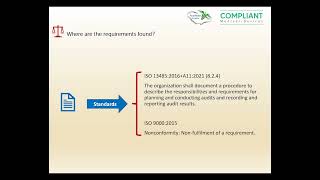
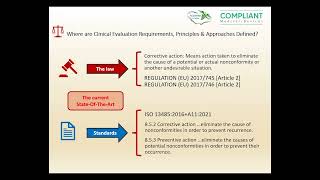
- ISO 13485 Clause 8.5: addresses corrective and preventive actions (CAPA).
- ISO 17021: defines major and minor nonconformities for certification bodies.
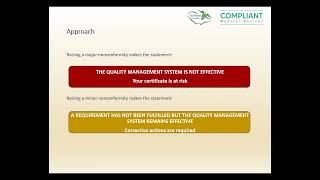
Major Nonconformities
These affect the Quality Management System (QMS) effectiveness and may jeopardise certification. Examples include:
- Direct impact on safety/performance (e.g., poor controls for non-conforming products).
- Significant doubt over process control (e.g., missing required workforce competencies).
- Multiple minor nonconformities in the same area, indicating systemic failure (e.g., several procedures missing version control).
- Legal breaches, such as missing regulatory marks.
Minor Nonconformities
These do not compromise the QMS’s ability to meet requirements but still need correction. Examples include:
- Trained personnel missing a filed training certificate.
- A single document lacking version control.
- A calibrated tool missing identification.
How to classify nonconformities
- Focus only on evidence, context, and direct consequences.
- Avoid assumptions about extended impacts, unless directly supported by facts.
- Example: if a missing ventilator label is found, the impact depends on whether a hospital had a backup unit.
Final Takeaways
- Major nonconformities indicate an ineffective QMS and threaten certification.
- Minor nonconformities mean requirements were not met, but do not compromise overall effectiveness.
- Audit results should focus on timely and effective remediation rather than just the number of nonconformities.
- Nonconformities should be viewed as opportunities for improvement.